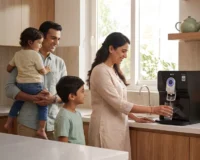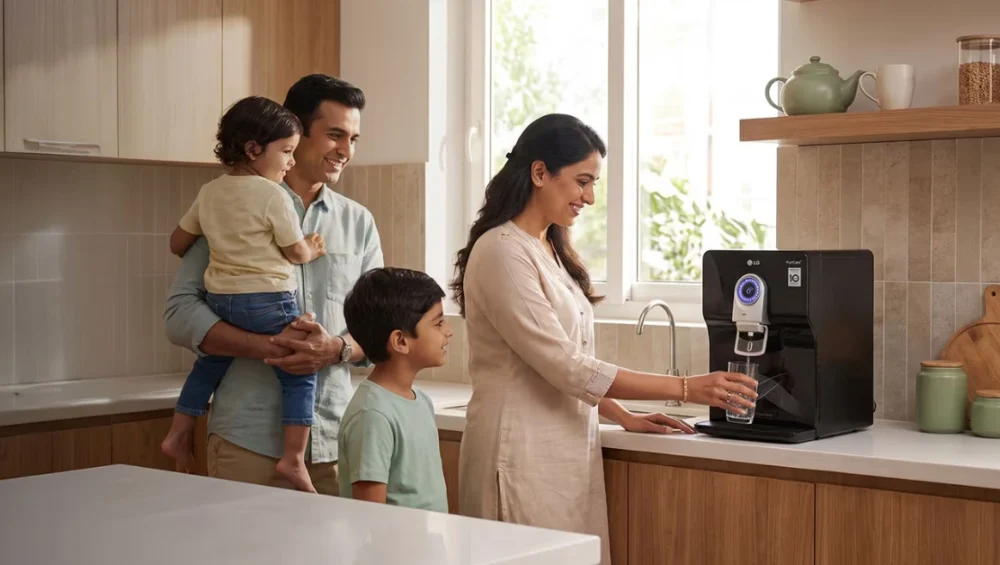
Every kitchen has that one glass by the sink, filled without a second thought and handed to a child or an elderly parent. We trust that glass completely. Yet, oddly enough, how to choose a water purifier is often decided based on a salesperson’s pitch, a neighbour’s recommendation, or whatever was on discount that week.
That’s a problem. Because the “best” water purifier for one home can be the wrong fit entirely for another. Water quality changes from one locality to the next, family sizes differ, kitchen layouts vary, and so does how much maintenance a household is willing to deal with. Buying blind usually means paying for a machine that either underperforms or does far more than you actually need.
This guide walks you through everything worth knowing before you buy, in plain language, so you can make a choice you won’t second guess six months later.
Why Choosing the Right Water Purifier Matters More Than You Think
A mismatched water purifier isn’t just an inconvenience. It can mean:
- Wasting several litres of water for every litre you actually drink
- Paying for RO filtration when your water didn’t need it in the first place
- Constantly running out of purified water because the tank is too small for your family
- Dealing with foul smell or a metallic taste because the storage tank isn’t built to protect stored water
- Higher annual maintenance bills than necessary
Getting it right the first time saves money, water, and a fair amount of frustration.
Step 1: Test Your Water Source and Check the TDS Level
Before comparing brands, understand what’s actually coming out of your tap.
TDS, or Total Dissolved Solids, tells you how many minerals, salts, and other dissolved substances are present in your water. It’s measured in ppm (parts per million), and a simple handheld TDS meter, available for a few hundred rupees, gives you a reading in seconds.
Here’s a rough guide:
- Below 300 ppm: Water is generally considered good for drinking, though local contamination (bacteria, sediment) can still be a concern
- 300 to 500 ppm: Moderate mineral content, often manageable with UV plus UF purification
- Above 500 ppm: Typically needs RO (Reverse Osmosis) filtration to bring dissolved solids down to safe levels
If your area relies on borewell water or has known hardness issues, you’re almost certainly looking at an RO purifier, since these systems are specifically built to strip out excess dissolved impurities that other technologies can’t touch.
Step 2: Match the Purifier to Your Family Size
It sounds obvious, but this is where a lot of buyers go wrong. A purifier tank that’s too small means constant refilling, especially during summer or when guests are over.
A general benchmark for Indian households:
- 2 to 3 members: 5 to 6 litre tank is usually sufficient
- 4 to 5 members: 7 to 8 litre tank works comfortably
- Larger families or frequent entertaining: Consider an 8 litre or higher capacity model
An average family of four consumes somewhere around 8 to 12 litres of purified water daily, once you factor in drinking, cooking, and general kitchen use. Undersizing your tank means the motor works harder and more often, which can shorten its lifespan too.
Step 3: Think About Water Wastage, Not Just Water Purity
Conventional RO systems have a reputation for wasting water. For every litre purified, older models can waste two or three litres as reject water. In a country where water scarcity is a real and growing concern, this matters.
Newer purifiers use recovery focused filtration technology that captures a significantly higher percentage of input water instead of discarding it. When you’re comparing models, ask specifically about the recovery rate, not just the purification stages. It’s a detail that gets glossed over in showroom conversations but makes a real difference to your water bill and your conscience over time.
Step 4: Look at the Storage Tank Material
This one rarely comes up, but it should. Plastic tanks, especially cheaper ones, are more prone to secondary contamination, algae buildup, and that faint stale smell you sometimes notice in stored purified water.
Stainless steel tanks, particularly food grade 304 SS, are more resistant to bacterial growth and don’t leach anything into the water over time. If the purifier includes some form of in tank UV treatment that periodically disinfects stored water (not just the water passing through the filter), that’s an added layer of protection worth having, especially if your household doesn’t use the full tank every day.
Step 5: Understand the Filtration Stages
A genuinely capable water purifier will explain its filtration process. Roughly, here’s how a good multi stage RO system typically works:
- Sediment filters trap large visible particles like mud, rust, and sand
- Carbon filters remove chlorine, volatile organic compounds, and unpleasant odours
- RO membrane is the core stage, filtering out dissolved salts, heavy metals, and microorganisms at a microscopic level
- Mineral cartridge adds back essential minerals like calcium and magnesium that RO filtration strips out, improving both taste and health value
- Post carbon filter gives the water its final polish, improving taste right before it reaches your glass
If a purifier skips the remineralisation step, your water might technically be “pure” but taste flat and offer little nutritional value.
Step 6: Factor In Installation Space and Type
Kitchens in Indian homes come in all shapes and sizes. Before choosing a model, measure your available counter or wall space.
- Wall mounted purifiers save counter space and suit compact kitchens
- Countertop units are easier to install but take up workspace
- Under sink models keep things out of view entirely, if your plumbing supports it
Also check whether the purifier needs a dedicated electrical socket nearby and whether your existing water pressure is compatible with RO systems, which generally need a minimum pressure to function efficiently.
Step 7: Don't Ignore Maintenance and Running Costs
The sticker price is just the beginning. Over a purifier’s lifetime, filter replacements and servicing add up.
Ask these questions before buying:
- How often do the filters need replacing, and what do they cost?
- Does the brand offer scheduled or automated service reminders?
- Is there a Filter Change Indicator, or will you need to guess when it’s time?
- What’s covered under warranty, and for how long?
A purifier that’s cheaper upfront but needs frequent, expensive filter changes can end up costing more over two or three years than a slightly pricier model with lower running costs.
A Quick Checklist Before You Buy
- Test your water’s TDS level
- Choose tank capacity based on family size
- Prioritise models with higher water recovery rates
- Check tank material (stainless steel is the safer long term choice)
- Confirm the purifier includes mineral restoration, not just filtration
- Measure your installation space in advance
- Compare filter replacement costs and service intervals, not just the price tag
Where to Buy the Right Water Purifier
Choosing a water purifier is a decision that affects your family’s daily health, so it deserves a bit of homework rather than an impulse purchase. At LG by Unilet, our team helps customers test water quality, understand their household’s actual consumption needs, and pick a model suited to their kitchen rather than pushing a one size fits all recommendation.
If you’re unsure where to start, walk in with your water’s TDS reading (or let us test it for you), tell us your family size, and we’ll help you shortlist options that genuinely fit your home.
Frequently Asked Questions
Is RO purification necessary for all types of water?
Not always. If your water source has low TDS (generally under 200 to 300 ppm), a UV or UF purifier may be sufficient. RO becomes necessary when dissolved solids are high, such as with borewell or hard water.
How often should a water purifier be serviced?
Most manufacturers recommend servicing every three to four months, though this can vary depending on your water quality and how much the purifier is used daily.
Does RO purified water lack minerals?
Standard RO filtration does remove naturally occurring minerals along with contaminants. Purifiers with a built in mineral cartridge address this by adding back calcium and magnesium after filtration.
Can I install a water purifier myself?
Basic countertop models can sometimes be self installed, but RO systems with dedicated plumbing connections are best left to a trained technician to avoid leaks or pressure related issues.
How do I know if my current purifier is still working properly?
Watch for signs like a change in taste, slower flow rate, unusual odour, or an overdue filter replacement. A simple TDS check before and after filtration can also confirm whether the purifier is performing as expected.